Welcome to the definitive hub for used car market research in Wilson TX. Whether you are shopping in Wilson, Wilson County, or nearby communities like Floresville, La Vernia, Poth, and Stockdale, this page explains how to evaluate prices, compare trims, and read true local demand before you buy. You will learn how to benchmark listings, read vehicle history, understand days on lot, and factor in Texas specific taxes and fees. Explore current options in our used-inventory, compare recent sales in sold-inventory, and dive into pricing strategies in our blog. If you are cross shopping across Texas, check regional trends in pages like used-car-market-research-bexar-tx and used-car-market-research-harris-tx. Use this guide to make confident, data informed decisions and find the right pre owned vehicle for your budget and lifestyle.
The Wilson TX used car market rewards preparation. Start with a budget, shortlist a few models, and measure every listing against recent local sales and ownership costs. Review titles and histories, compare days on lot, and practice a consistent inspection and test drive routine. For additional help, explore our about-us, message our team through contact-us, and review our visitor-agreement and privacy-policy before you share details. The quick references below will guide each step.
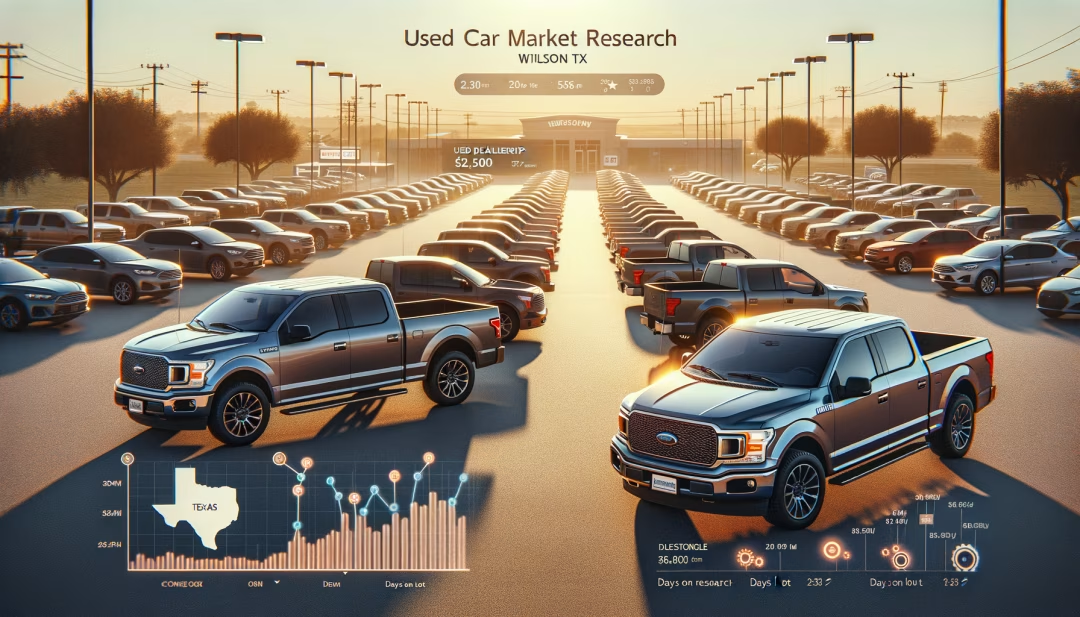
In Wilson and greater Wilson County, shoppers often prioritize reliability, cargo space, and value. Demand is consistently strong for half ton pickups, midsize SUVs, compact crossovers, and efficient commuter sedans. Prices can move with seasonality, model year changeovers, fuel price swings, and regional supply shifts from nearby metros. Trucks and SUVs with clean histories, service records, and desirable packages tend to sell faster and hold stronger prices. Sedans, compact hatchbacks, and older luxury models can deliver outsized value if you verify condition and ownership costs.
Treat your search like a project. Define a total budget that includes purchase price, sales tax, title and registration, insurance, maintenance, and expected fuel costs. Then create a shortlist of 2 to 4 models that fit your needs. Use listings in used-inventory and pricing visible in sold-inventory to set realistic targets. Review miles, trims, equipment, accident history, and days on lot to understand why two similar vehicles might be priced differently.
A complete history review can prevent surprises. Look for a clean Texas title, consistent ownership timelines, and maintenance documentation. Reports should show mileage windows that make sense, no flood or salvage events, and damage disclosures that match any visible repairs. Verify VINs on the dash, door jamb, and title match precisely. If work was performed, ask for parts and service invoices.
Use a consistent checklist. Cold start the vehicle, listen for rattles on startup, and watch idle quality. Scan for warning lights. On the road, test acceleration, steady cruise, hard braking, and tight turns. Check for vibration, alignment pull, and brake pulsation. Inspect underbody for rust, leaks, overspray, or fresh undercoating used to hide repairs. Confirm all electronics work, including cameras, sensors, and advanced driver assistance features if equipped.
Anchor your offer with data. Lead with comparable sales, equipment differences, and any reconditioning items you will need to address soon. Keep the tone professional and focus on total value. If the vehicle is fresh to market and competitively priced, do not hesitate; strong units move quickly. If days on lot are elevated and comparables support a lower number, present your target range and explain the math. Be ready to walk if the numbers do not align.
Financing shapes total cost. Shorter terms reduce total interest paid, while longer terms reduce monthly payments but can cost more overall. Rate, term, and loan to value depend on credit and down payment. Pre approvals help you compare options. If you are exploring credit rebuilding paths, study educational resources such as second-chance-auto-financing-bexar-tx, second-chance-auto-financing-travis-tx, and second-chance-auto-financing-harris-tx to understand typical documents, down payment expectations, and budget planning.
Texas motor vehicle sales tax is 6.25 percent of the purchase price or the standard presumptive value if applicable. Title, registration, and local fees vary by county and vehicle type. Insurance must meet Texas minimums. Texas ended the annual safety inspection requirement for most noncommercial vehicles in 2025. Emissions checks may still apply in designated counties; Wilson County is not an emissions county. Always confirm the latest requirements with county and state resources.
Timing can improve value. End of model year transitions often unlock discounts on outgoing generations. End of month and quarter can increase motivation on aged inventory. When fuel prices rise, efficient sedans and hybrids may appreciate, while large SUVs can soften slightly, and the reverse can also occur. Watch weather events and regional auctions, which can shift local supply for a few weeks at a time.
Pickups and midsize SUVs are household favorites for space and versatility. Inspect frames and beds for heavy use, check tow packages, coolant temps under load, and transmission health. Compact crossovers offer efficiency; confirm service for CVT or traditional automatics as required. Sedans can be low cost to own; focus on timing chain or belt intervals, brake life, and tire age. For all segments, technology features like adaptive cruise or lane systems must be tested thoroughly for faults or sensor misalignment.
You can compare markets across Texas to understand how Wilson pricing fits into the statewide picture. Explore neighboring research pages and buyer guides to see how equipment and mileage influence price in urban versus rural areas. This context helps you decide when to act locally or cast a wider search net.